Advanced Techniques
Smart Card Integration and Security Features
Institutions looking to maximize the value of their bulk ID card orders are increasingly adopting smart card technologies. Schools integrate RFID-enabled cards with automated attendance management systems, sending real-time SMS alerts to parents when a student enters the campus. Corporates utilize NFC or proximity cards to manage secure access across multiple office zones.
To prevent forgery, advanced security features can be embedded directly into the PVC cards. Options include custom holographic overlays, UV fluorescent printing that only appears under blacklight, and microtext. These features are especially critical for large enterprises and universities where unauthorized access poses a significant risk.
Multi-Site Coordination and Cost Optimization
Managing ID card orders for multi-branch organizations requires strategic coordination. Companies with offices across South India can leverage Unicard Automation’s regional presence. With branches in Hyderabad and Vijayawada supported by the main Bengaluru factory, institutions can centralize their procurement while ensuring localized support and faster distribution.
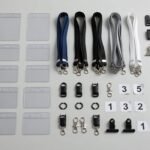
To optimize costs on orders exceeding 5,000 cards, buyers should consider bundling their purchases. Ordering custom-printed lanyards, rigid cardholders, and yoyo retractors from the same manufacturer often results in volume discounts. Additionally, choosing dual-sided printing only when absolutely necessary can significantly reduce the overall per-card cost.
Core Concepts
Understanding Card Specifications
To make informed decisions, buyers must understand the fundamental specifications of bulk ID cards. The global standard for ID cards is the CR80 format, which measures 85.6 mm by 54 mm. The standard thickness is 0.76 mm, often referred to as 30 mil. Ensuring your cards meet these ISO/IEC 7810 standards guarantees compatibility with standard cardholders and lanyards.
Institutions must also choose between different card categories. Plain PVC cards are cost-effective and ideal for basic visual identification. However, many schools and corporates are transitioning to smart cards equipped with RFID, NFC, or magnetic stripes for access control and automated attendance tracking.
Printing Technologies and Factory-Direct Advantages
Bulk ID card production relies heavily on Variable Data Printing (VDP). This digital printing process allows a static design template to be populated with unique data from a spreadsheet, ensuring every card is personalized without slowing down production speed. Buyers should also understand the difference between heat lamination, which fuses the card layers permanently, and cold lamination, which is prone to peeling.
Working with a factory-direct manufacturer like Unicard Automation offers significant advantages over local resellers. With a massive production capacity of 1.5 to 2 lakh cards per day at their Bengaluru factory, Unicard ensures consistent print quality, lower per-unit costs, and the elimination of middleman markups. This scale is a strong indicator of reliability for large institutional orders.
Expert Tips
Avoiding Common Bulk Ordering Mistakes
One of the most frequent mistakes institutions make is submitting unverified data or low-resolution photographs. A 5,000-card batch can be ruined by a single Excel formatting error or pixelated images. Always standardize your data and enforce strict photo guidelines before sending files to the manufacturer.
Another critical error is purchasing from office supply vendors or resellers rather than direct manufacturers. Resellers often lack the infrastructure for high-volume printing, leading to missed deadlines and inconsistent quality. Always verify a vendor’s actual production capacity; a facility producing 1.5 to 2 lakh cards daily, like Unicard, guarantees factory-direct reliability.
Evaluating Manufacturers and SLAs
Before signing a contract, ask the manufacturer about their lamination process. Insist on heat-and-pressure lamination, as cold-laminated cards will inevitably peel at the edges. You should also request physical samples of their previous work to evaluate the card flexibility, print sharpness, and edge-to-edge color consistency.
Finally, ensure your agreement includes clear Service Level Agreements (SLAs). Define the guaranteed turnaround time for the initial bulk order and establish a streamlined process for mid-year reprints. A professional manufacturer will offer a dedicated portal or a simplified workflow for ordering small batches of replacement cards for new hires or late admissions.
Practical Application
The Step-by-Step Ordering Workflow
The bulk ordering process begins with a Request for Quote (RFQ) based on your specific card requirements and quantity. Once the pricing is approved, the buyer submits the finalized design template and the variable data spreadsheet. It is crucial that the image file names exactly match the corresponding entries in the Excel sheet to avoid mismatched photos.
After data submission, the manufacturer will generate digital proofs for a small batch of cards. Institutions must carefully review these proofs for spelling errors, color accuracy, and alignment. Full-scale production only begins after the buyer provides official sign-off on the proofs.
Production, QC, and Pan-India Delivery
During production, a reliable manufacturer will implement strict Quality Control (QC) checks. This includes verifying barcode readability, testing RFID chip functionality, and ensuring the lamination is flawless. Once the batch passes QC, the cards are securely packaged to prevent damage during transit.
For a Bangalore-based manufacturer like Unicard Automation, handling pan-India delivery is a streamlined process. Whether the cards are destined for a local Bengaluru tech park or require coordinated dispatch to branches in Hyderabad and Vijayawada, the logistics are managed centrally. Upon receiving the delivery, buyers should immediately verify the count and test a sample of smart cards to ensure they integrate with their internal systems.
Prerequisites
Essential Preparations Before Contacting a Manufacturer
Before reaching out to a bulk ID card manufacturer in Bangalore, institutions must organize their data and design assets. The most critical prerequisite is a clean, well-formatted database. Manufacturers require an Excel spreadsheet containing all variable data, such as names, designations, and ID numbers, alongside perfectly matched high-resolution employee or student photographs.
Internal approvals must be finalized before requesting a quote. Schools and corporates need to decide on the card type, such as standard PVC or smart cards, and confirm the exact data fields to be printed. Having a clear budget and understanding the Minimum Order Quantity (MOQ) of the supplier will streamline the initial discussions.
Data Privacy and Compliance
When handing over sensitive student or employee information, data privacy becomes a major concern. Institutions must ensure the manufacturer follows strict data security protocols to prevent unauthorized access or data leaks. It is highly recommended to sign a Non-Disclosure Agreement (NDA) before sharing any databases.
Additionally, buyers should prepare their design files in the correct formats. Logos should be in vector format (AI or EPS), and the overall design should account for the standard CR80 card dimensions with appropriate bleed areas. Having these prerequisites ready prevents unnecessary delays in the proofing stage.
Always verify production capacity, heat lamination quality, and data privacy before ordering bulk ID cards.
Frequently Asked Questions
What is the standard size and thickness for bulk PVC ID cards?
The global standard for PVC ID cards is the CR80 format, which measures 85.6 mm by 54 mm (identical to a standard credit card). The industry-standard thickness is 0.76 mm, commonly referred to as 30 mil. Ensuring your cards meet these ISO/IEC 7810 specifications guarantees they will fit perfectly into standard badge holders and lanyards.
How does Variable Data Printing (VDP) work for bulk ID card orders?
Variable Data Printing is a digital printing process that allows a manufacturer to print unique information on every single card without slowing down the production run.
- A static design template is created with fixed logos and colors.
- An Excel database containing names, ID numbers, and photo file names is linked to the software.
- The system automatically maps the unique data to each card during printing.
Why should institutions choose a factory-direct manufacturer over a local print shop?
Factory-direct manufacturers, like Unicard Automation in Bengaluru, possess the industrial infrastructure to produce up to 2 lakh cards per day. This scale ensures consistent print quality, proper heat lamination that prevents peeling, and significantly lower per-unit costs. Local print shops often act as resellers, which adds middleman markups and increases the risk of delayed deliveries for large bulk orders.
Can RFID ID cards be integrated with school attendance systems?
Yes, RFID-enabled smart cards are widely used in Indian schools for automated attendance tracking. When a student taps their ID card on a campus reader, the system instantly logs their entry and can automatically trigger an SMS notification to the parents. This integration enhances campus security and drastically reduces the administrative burden of manual roll calls.
Sources & References
Powered by 42flows