
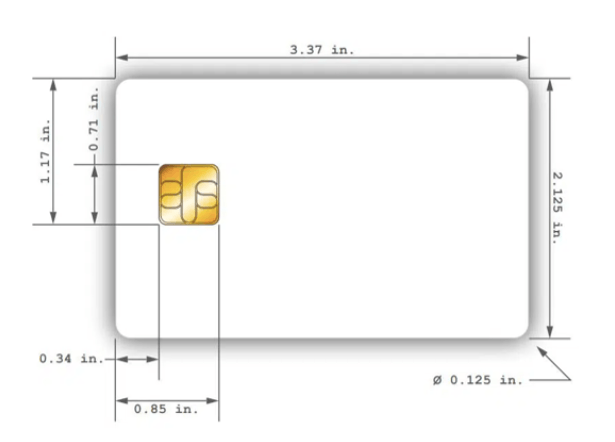
Even-edged PVC cards prevent printhead damage, eliminating expensive repairs and ensuring flawless ID printing.
The problem
Jagged, poorly cut PVC cards cause micro-abrasions and debris buildup on sensitive ID printer printheads, leading to dead pixels, white lines on prints, and expensive hardware failure.
Who’s affected: School administrators, corporate facilities managers, and high-volume ID card issuers.
The solution
Switching to precision-cut, even-edged PVC cards eliminates the physical friction that destroys printheads, while one-roof production bundles resolve artwork and colour-matching inconsistencies.
Why it works: Perfectly smooth card edges prevent physical strikes against the printhead’s microscopic glass heating elements, stopping physical damage and debris accumulation at the source.
The Anatomy of a Printhead Disaster: Why Printers Fail
To understand why ID card printers experience chronic printhead errors, we must first examine the microscopic environment where the printing happens. In a standard Direct-to-Card (DTC) printer, the printhead is a highly sensitive component consisting of hundreds of microscopic glass-coated heating elements. These elements heat up to transfer ink from a ribbon directly onto the surface of a PVC card. The tolerance for error is virtually zero; the printhead must maintain direct, flush contact with the card to produce a crisp image.
The root cause of most printhead failures is not electrical, but physical. Cheap, mass-produced PVC cards often suffer from poor die-cutting processes. This leaves microscopic burrs, jagged edges, and raised lips along the perimeter of the card. When a card with a jagged edge is pulled through the printer’s transport rollers, that raised edge acts like a microscopic razor blade scraping against the delicate glass elements of the printhead.
Over time, these micro-abrasions cause the glass coating to chip or shatter. Once a heating element is physically damaged, it can no longer transfer ink. The result is the dreaded ‘white line of death’—a blank, unprinted line running horizontally across every subsequent ID card. Furthermore, jagged edges tend to shave off microscopic plastic dust as they move through the printer. This debris accumulates on the printhead, causing overheating and further pixel failure. Naive solutions, such as running cleaning cards more frequently, fail to address this root cause because cleaning kits can only remove dust; they cannot heal a scratched glass element or fix a poorly cut card.
Who Bears the Brunt of Printer Downtime?
Printhead failure is rarely an isolated IT issue; it is a severe operational bottleneck that impacts specific organizational profiles at the worst possible times. The organizations that suffer the most are those reliant on bulk PVC ID card printing, where printer uptime is critical to security and operational flow.
Educational Institutions: School administrators and university IT departments face immense pressure during the start of the academic year. A university may need to print 5,000 to 10,000 student and faculty ID cards within a two-week window. When a batch of cheap, jagged cards destroys a printhead on day two of orientation, the entire enrollment process grinds to a halt. The cost is not just the $500 to $1,000 for a replacement printhead; it is the chaos of unbadged students, compromised campus security, and hundreds of wasted ribbons and blank cards.
Corporate Facilities and HR Managers: In the corporate sector, ID cards are tied directly to access control systems. When a corporate printer goes down due to printhead errors, new hires cannot access the building, secure floors, or IT networks. Facilities managers are left scrambling to issue temporary, less secure badges, creating vulnerabilities in the company’s security posture. High-volume corporate environments cannot afford the downtime associated with waiting for a technician to diagnose and replace a damaged printhead.
In both scenarios, the users affected are not printer technicians; they are administrative professionals who need reliable, plug-and-play technology. The frustration of dealing with constant maintenance issues drains productivity and inflates the total cost of ownership of the ID issuance program.
The Mechanical Fix: How Even-Edged PVC Cards Protect Hardware
The solution to physical printhead damage is physical prevention. By eliminating the jagged edges and burrs that cause micro-abrasions, organizations can exponentially increase the lifespan of their ID card printers. This is where the engineering of even-edged PVC cards becomes critical.
Unicard Automation has directly solved this #1 printer maintenance issue through its in-house Bengaluru production facility. By controlling the manufacturing process from start to finish, Unicard utilizes precision die-cutting tooling that ensures a zero-tolerance variance on card edges. The result is a perfectly smooth, even-edged PVC card that glides seamlessly through the printer’s transport mechanism.
When an even-edged card passes under the printhead, there is no raised lip to strike the glass elements.
By switching to even-edged cards, organizations shift from a reactive maintenance model (constantly replacing broken printheads) to a proactive prevention model, ensuring their hardware operates at peak efficiency for years rather than months.
Beyond the Edge: The One-Roof Bundle Advantage
While protecting the printhead is the primary mechanical concern, the broader challenge of ID card issuance lies in vendor fragmentation. Schools and corporates often source their PVC cards from one vendor, their lanyards from another, and their artwork design from a third. This fragmented approach leads to a host of secondary problems, most notably colour-matching failures and artwork formatting issues.
Unicard Automation addresses this by offering comprehensive ‘one-roof’ bundles. Because production is handled entirely in-house in Bengaluru, organizations can source their even-edged PVC cards, custom lanyards, and ID accessories from a single point of origin. This eliminates the frustrating scenario where the corporate blue on the ID card clashes with the blue on the lanyard.
These one-roof bundles also eliminate artwork hassles. When dealing with cheap, third-party card suppliers, organizations often find that their artwork doesn’t print correctly due to slight variations in card dimensions or surface coatings. Unicard’s standardized, high-quality PVC surfaces ensure that logos, barcodes, and employee photos print with high-definition clarity every time. For corporate HR teams and school administrators, this means no more wasted hours tweaking design files or arguing with multiple vendors over quality control. The entire ID issuance ecosystem is streamlined, consistent, and guaranteed to work harmoniously with their printing hardware.
Strategic Timing: When to Upgrade Your Supply Chain
-
1.Before Bulk Print Runs
The most critical time to upgrade your card supply is immediately preceding a high-volume printing event. For schools, this is the mid-summer preparation period before the fall semester. For corporates, this might be ahead of a major merger, rebranding initiative, or annual security badge reissue. Introducing high-quality, even-edged cards before these stress tests ensures the printer will survive the heavy workload without interruption.
-
2.At the First Sign of Trouble
If you are already in the middle of a print cycle, watch for early warning signs of printhead stress. If you notice the printer ribbon wrinkling or snapping frequently, it is often a sign that jagged card edges are catching on the ribbon and dragging it out of alignment. Similarly, if you see faint printing along the very edges of the card, the printhead is struggling to maintain flush contact due to uneven card surfaces. At the very first sign of these symptoms, halt production and switch to even-edged cards to save the printhead from permanent damage.
Before Bulk Print Runs: The most critical time to upgrade your card supply is immediately preceding a high-volume printing event. For schools, this is the mid-summer preparation period before the fall semester. For corporates, this might be ahead of a major merger, rebranding initiative, or annual security badge reissue. Introducing high-quality, even-edged cards before these stress tests ensures the printer will survive the heavy workload without interruption.
At the First Sign of Trouble: If you are already in the middle of a print cycle, watch for early warning signs of printhead stress. If you notice the printer ribbon wrinkling or snapping frequently, it is often a sign that jagged card edges are catching on the ribbon and dragging it out of alignment. Similarly, if you see faint printing along the very edges of the card, the printhead is struggling to maintain flush contact due to uneven card surfaces. At the very first sign of these symptoms, halt production and switch to Unicard Automation’s even-edged cards to save the printhead from permanent damage.
Frequently Asked Questions
What causes the white line on my ID card prints?
A horizontal white line on an ID card is caused by a dead pixel on the printer’s printhead. This usually happens when a jagged or poorly cut PVC card scratches and destroys the microscopic glass heating element responsible for transferring ink in that specific spot.
Can a damaged ID printer printhead be repaired?
No. Once the microscopic glass elements on a thermal printhead are scratched, chipped, or blown, the damage is permanent. The entire printhead assembly must be replaced, which is often the most expensive maintenance cost for an ID printer.
Why are Unicard Automation cards better for printer longevity?
Unicard Automation manufactures its cards in-house in Bengaluru using precision die-cutting. This results in perfectly even-edged PVC cards that glide under the printhead without causing the micro-abrasions, friction, or plastic dust buildup associated with cheaper, jagged cards.
What is included in a one-roof ID card bundle?
A one-roof bundle consolidates your entire ID issuance supply chain. It includes high-quality even-edged PVC cards, custom-printed lanyards, and accessories, ensuring perfect colour-matching across all items and eliminating the hassle of coordinating artwork with multiple different vendors.
Powered by 42flows