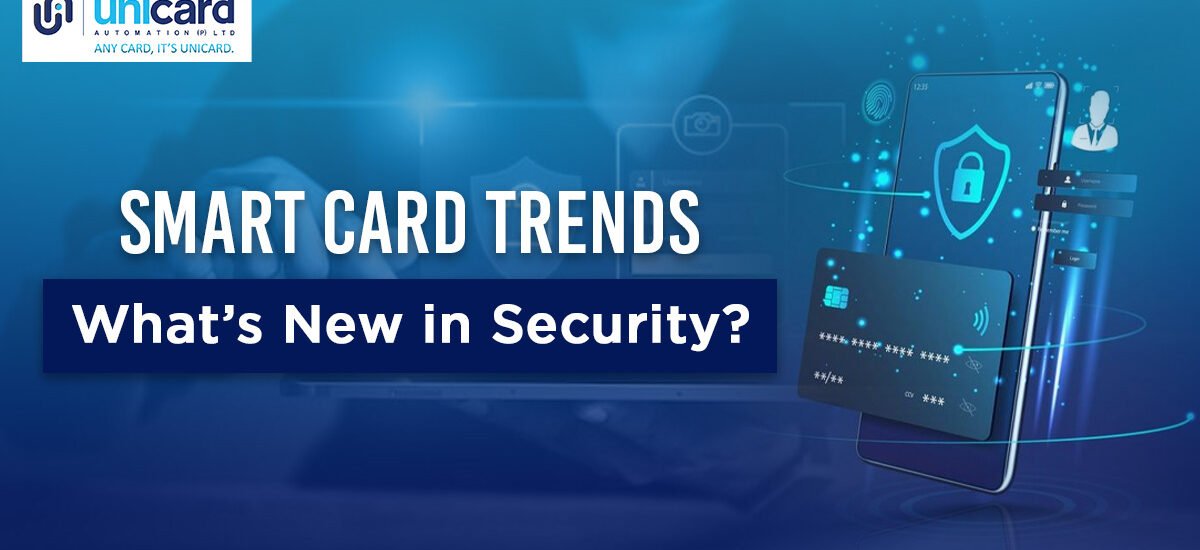
Smart cards have been around for years quietly doing their job in the background. Whether you’re tapping your card at a grocery store checkout or using an ID badge to enter a secure office, these tiny chips have made everyday tasks faster, easier, and safer.
For a long time, smart cards were mainly used to store basic information for banking, healthcare, and government IDs. But as cyber threats grow more advanced, the technology inside these cards is evolving too. Today, exciting new trends are emerging that promise stronger security and smarter functionality than ever before.
Let’s take a look at what’s shaping the future of smart card security.
1. Blockchain Integration: A Major Security Upgrade
One of the biggest game changers in smart card technology is blockchain integration. Blockchain is a decentralized, tamper-proof ledger that records data in a secure and transparent manner.
So how does this help smart cards?
Instead of storing sensitive information directly on the card, the card holds cryptographic keys that unlock data stored safely on a blockchain. Even if the card is lost or stolen, the actual data stays protected. Every time the card is used, a new transaction block is added to the chain creating a clear, permanent trail that’s nearly impossible to alter.
This approach is especially beneficial for:
- Healthcare: Protecting sensitive patient records
- Supply chain management: Verifying the authenticity of products
Blockchain essentially turns a simple smart card into a powerful, high-security access tool.
2. Stronger Encryption for Better Data Protection
As more personal and financial data gets stored digitally, the need for stronger protection becomes crucial. Modern smart cards now use advanced encryption methods to stay ahead of hackers.
Here are two major types:
AES (Advanced Encryption Standard)
A fast and highly secure method using one shared key for encrypting and decrypting data. It’s excellent for keeping stored or transmitted card data safe.
RSA (Rivest-Shamir-Adleman)
An asymmetric encryption system that uses a public and a private key. Anyone can encrypt information with the public key, but only the private key holder can decrypt it. This makes it ideal for:
- Digital signatures
- Secure authentication
- Ensuring only the real cardholder approves a transaction
By combining both AES and RSA, smart cards create multiple layers of security, making unauthorized access extremely difficult.
3. Smarter, More Secure Access Control
Smart cards aren’t just for payments, they’re essential for controlling access to buildings and secure areas. But access control is getting smarter too.
Modern systems can do much more than simply unlock a door:
- Grant access only during approved time slots
- Require multi-factor authentication (like a PIN or fingerprint) for high-security areas
- Track entries and exits in real time
- Alert security teams when unusual activity occurs
These advanced systems integrate with building management tools, giving organizations a clearer view of what’s happening and allowing faster response to security concerns.
The Future: Automated, Intelligent, and Secure
Smart card technology is evolving fast. With blockchain, advanced encryption, and smarter access control, smart cards are transforming from simple ID tools into powerful components of modern security systems.
Businesses are quickly adapting to these trends.
Unicard Automation, for example, delivers customized smart card solutions that bring together top-tier security and automation. Their integrated systems help organizations safeguard their data, control access, and streamline operations with ease.
As technology continues to advance, smart cards will remain a key part of secure, automated environments both digital and physical.